

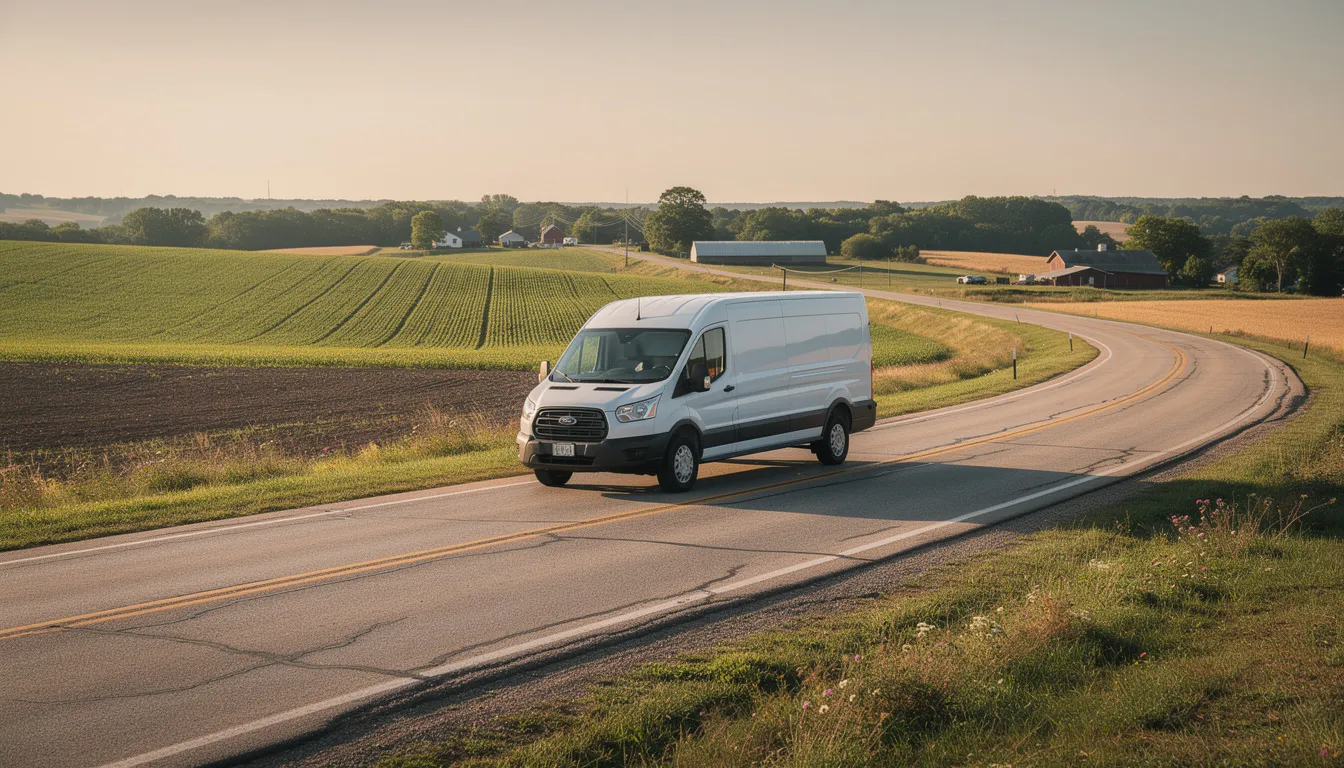
If you’re a delivery driver in Central Missouri who’s been injured on the job, you’re probably wondering: can I get workers’ compensation benefits? The answer depends almost entirely on one question—are you an employee or an independent contractor?
This distinction might seem like a technicality, but it determines whether you’ll have access to medical treatment and wage replacement through your employer’s workers’ compensation insurance, or whether you’re left covering everything out of your own pocket. And here’s the frustrating part: many drivers are being misclassified.
In this guide, we’ll break down how Missouri law draws the line between employees and independent contractors, what that means for your workers’ comp eligibility, and what legal options you have if you’ve been hurt while delivering packages, food, or other goods across Columbia and Central Missouri.
Missouri Delivery Drivers: Workers’ Comp or Not? (Answering Your Question Up Front)
The short answer: most delivery drivers who are true employees can receive workers’ compensation benefits in Missouri. However, many drivers labeled as independent contractors cannot—unless they’ve been misclassified.
- Classification as an employee versus a contractor is frequently disputed in delivery work, particularly since around 2018 when app-based platforms like DoorDash, Uber Eats, Instacart, and Amazon Flex expanded rapidly across Missouri.
- Workers’ compensation generally covers W-2 employees of companies like UPS, FedEx Ground (company drivers), local courier services, grocery delivery operations, and restaurant chains with in-house delivery staff.
- Many gig drivers and route drivers throughout Central Missouri are treated as independent contractors on paper—but they may legally qualify as employees if the company exercises significant control over how, when, and where they work.
- The Law Office of Chris Miller in Columbia, Missouri can review your employment status and injuries during a free consultation to determine whether a workers’ comp claim, a personal injury claim, or both may be available to you.
- Keep reading to understand how Missouri law distinguishes between these two categories—and why that distinction matters so much for your ability to get the benefits you need.
Overview of Missouri Workers’ Compensation for Delivery Drivers
Missouri’s workers’ compensation system provides critical protections for delivery drivers who are injured while on the job in Columbia and throughout Central Missouri. Understanding how this system works is the first step toward knowing your rights.
Missouri workers’ compensation operates as a no-fault system under Chapter 287 of the Missouri Revised Statutes. This means that injured employees generally don’t need to prove their employer did anything wrong to receive medical care and wage replacement—the injury just needs to arise out of and in the course of employment.
Most Missouri employers with five or more employees are required to carry workers’ compensation insurance. For construction employers, coverage is mandatory with even one employee. This requirement typically extends to delivery employees on the payroll.
Common delivery employers covered by Missouri workers’ comp include:
- Local courier companies
- Regional trucking outfits
- Restaurant chains with in-house delivery teams
- E-commerce shippers with W-2 drivers
- Grocery stores offering home delivery
When you’re covered as an employee, benefits available under Missouri law typically include:
- Authorized medical treatment – Payment for reasonable and necessary care from employer-approved providers
- Temporary total disability – Approximately two-thirds of your average weekly wage while you’re off work recovering
- Permanent partial or total disability – Benefits based on lasting impairment after you’ve reached maximum medical improvement
- Mileage reimbursement – For travel to medical appointments in some cases
One important point: workers’ compensation is usually the “exclusive remedy” against your employer. This means you generally can’t sue your employer directly for a work injury. However, injured delivery drivers may still have separate personal injury claims against at-fault third parties—like negligent motorists or dangerous property owners—for pain and suffering and full wage loss beyond what workers’ comp provides.
Employee vs. Independent Contractor for Missouri Delivery Drivers
The difference between “employee” and “independent contractor” isn’t just a paperwork detail. For Missouri delivery drivers, it’s the dividing line between having workers’ compensation coverage and being left to handle work related injuries entirely on your own.
Here’s the basic rule: traditional employees are generally covered by Missouri workers’ compensation. Independent contractors typically are not—unless they’ve been misclassified and actually function as employees under the law.
Companies may issue a W-2 to employees and a 1099 to independent contractors. But here’s what many drivers don’t realize: tax forms alone do not control your legal status. Courts and state agencies look at the real working relationship, not just the label on a piece of paper.
The core concept Missouri decision-makers examine is “economic dependence” and control:
- Employees are economically dependent on the company, follow company rules, and have limited ability to work for competitors
- True independent contractors are in business for themselves, set their own methods, control their schedules, and can work for multiple clients
Missouri courts and regulators examine factors similar to those used by the U.S. Department of Labor and IRS. These include who controls routes, drivers schedules, appearance standards, customer contact rules, and whether the driver can hire helpers or negotiate rates.
Many delivery drivers in Missouri—particularly route drivers who must wear branded uniforms, follow strict delivery windows, and cannot meaningfully negotiate pay—may actually be employees despite being called contractors. If that describes your situation, you may qualify for benefits you’ve been told you can’t receive.
Key Factors Missouri Uses to Distinguish Employees from Independent Contractors
No single factor decides whether you’re an employee or contractor. Instead, Missouri decision-makers look at the whole picture of your working relationship with the company.
Here are the practical factors that matter most for delivery drivers:
- Schedule control – Who decides your daily schedule, sequence of stops, and geographic territory?
- Appearance requirements – Must you wear a company uniform or display company logos on your vehicle?
- Equipment and tools – Who provides the vehicle, scanner, smartphone, fuel, insurance, and maintenance?
- Freedom to decline work – Can you refuse assignments without penalty or work for competitors at the same time?
- Pay structure – Are you paid by the hour, by route, per drop, or per project? Is your pay non-negotiable?
- Discipline and termination – Can the company discipline or terminate you for performance issues like a traditional employer would?
The more control and direction the company exercises over your day-to-day work, the more likely Missouri law will treat you as an employee rather than a contractor.
Consider this: in 2014, a federal court determined that FedEx Ground drivers functioned as employees—not independent contractors—due to FedEx’s comprehensive oversight of routes, schedules, attire, and performance standards. This led to a $228 million class action settlement. While that case wasn’t in Missouri, it shows how courts scrutinize delivery relationships nationwide.
The Law Office of Chris Miller can help gather contracts, pay records, communication logs, and app screenshots to analyze your true status under Missouri law.
Common Injuries & Risks for Missouri Delivery Drivers
Delivery drivers across Central Missouri face unique job hazards every day: long highway miles on I-70 and Highway 63, constant stopping in neighborhoods, and frequent lifting and carrying of heavy packages.
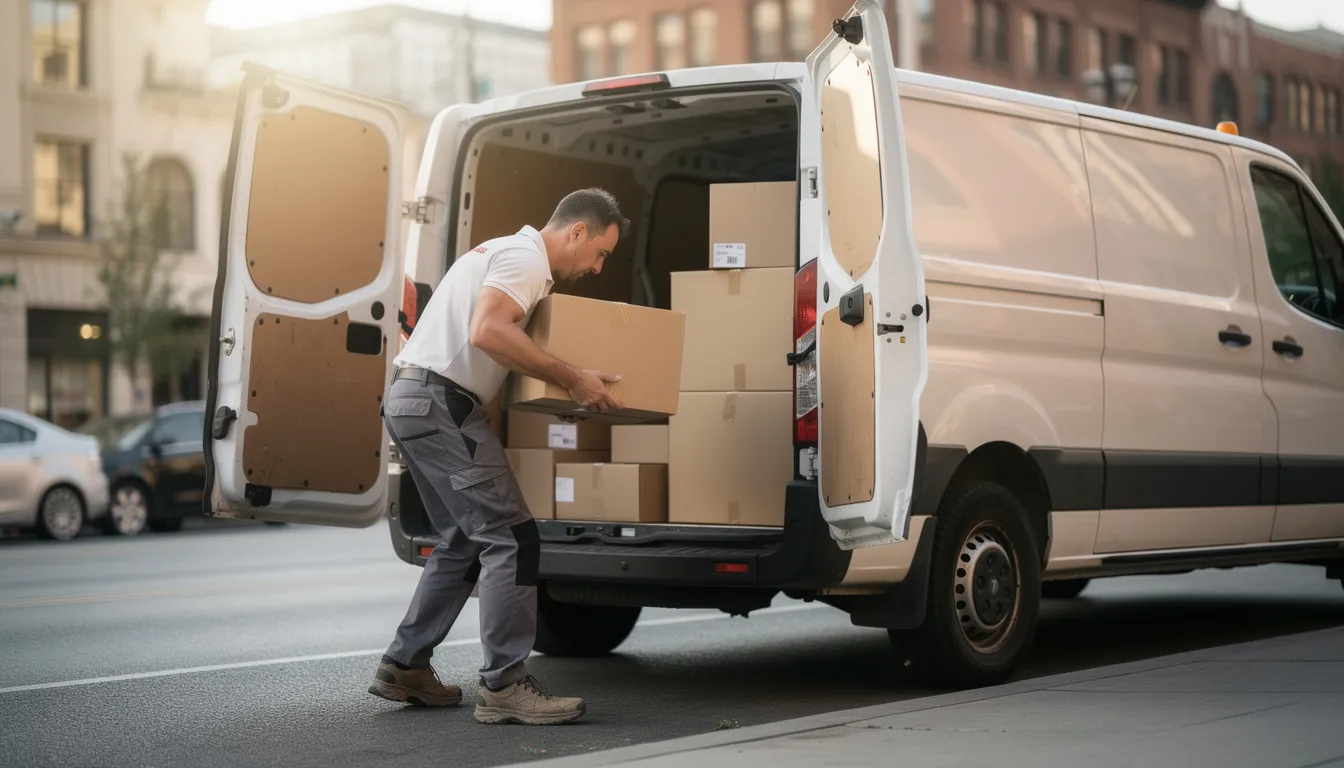
Typical on-the-job injuries for Missouri delivery drivers include:
- Motor vehicle collisions – Crashes at intersections in Columbia, Jefferson City, Moberly, and surrounding areas are common given the constant road time
- Back, shoulder, and knee injuries – From lifting heavy packages or carrying loads up stairs repeatedly
- Slips, trips, and falls – On wet or icy driveways, porches, and loading docks, particularly during Missouri winters from December through February
- Repetitive strain injuries – From scanning packages, gripping steering wheels, or climbing in and out of vans hundreds of times per day
- Dog bites and assaults – While approaching residences or businesses for deliveries
For employees, these injuries can be covered under workers’ compensation if they arise out of and in the course of employment—whether they occur on the road, at a warehouse, or on customer property.
For those classified as independent contractors, workers’ comp coverage typically isn’t available. However, you may still pursue a personal injury claim or premises liability case when someone else’s negligence contributed to your injury.
Examples of When Delivery Drivers Are “On the Job” in Missouri
Whether you qualify for workers’ comp often turns on whether you were acting within the scope of employment at the time of your injury. Here are concrete scenarios that would typically be covered for employees:
- A Columbia pizza delivery driver (W-2 employee) rear-ended while driving from the restaurant to a customer’s house
- An Amazon-style route driver injured while lifting a 70-pound package onto a customer’s porch in Ashland
- A grocery delivery employee who slips on ice in a customer’s driveway in December and fractures a wrist
- A courier struck by a distracted driver while crossing a loading dock lot between the van and a warehouse door
On the other hand, injuries during personal errands, significant detours, or after clocking out may not be covered as work-related under Missouri law. The circumstances of your specific situation matter.
Misclassification of Delivery Drivers in Missouri
Misclassification is common in the delivery and trucking industry—and many Missouri drivers don’t realize they’ve been incorrectly labeled as certain independent contractors when they should legally be treated as employees.
Why do companies benefit from calling drivers contractors? The list is significant:
- Avoiding workers’ compensation insurance premiums
- Skipping overtime pay requirements
- Eliminating payroll taxes
- Sidestepping many employee protections under Missouri law
Here are common red flags for misclassification in the delivery context:
- You perform full-time work for a single company and cannot realistically work elsewhere
- The company sets your routes, controls customer contact, and disciplines you for minor deviations
- You’re required to follow a detailed operations manual or script when interacting with customers
- The company monitors your vehicle location through GPS and tracks your on-time performance
- You must wear required uniforms or use company-branded equipment
- Your work hours are dictated rather than chosen
Large delivery companies and trucking firms nationwide have faced multi-million-dollar settlements for misclassifying drivers. Lawsuits brought by other drivers have played a significant role in challenging misclassification and recovering unpaid wages or benefits, often through class actions or collective lawsuits.
In Missouri, a misclassified driver may be able to challenge their independent contractor status before the Missouri Division of Workers’ Compensation or in court, potentially unlocking workers’ comp benefits despite a 1099 label.
The Law Office of Chris Miller can examine your contracts, weekly schedules, pay stubs, and app instructions to determine whether a misclassification argument is realistic for your situation.
Why Classification Matters for Your Missouri Injury Claim
Your classification directly impacts what benefits and legal options are available to you after an injury.
If you’re classified as an employee, you typically have access to:
- Employer-funded medical treatment through workers’ comp
- Temporary wage replacement while you’re off work
- Permanent disability compensation if long-term limitations remain after recovery
If you’re classified as a true independent contractor, you often:
- Must rely on personal health insurance or pay medical bills out of your own expenses
- Cannot claim workers’ comp wage loss benefits
- Must pursue only a personal injury claim if another party was at fault—which can be riskier and slower
Here’s an important point: misclassified drivers might actually have both rights. If you can prove you should be an employee, you may have a workers’ compensation claim plus potential wage-and-hour or contract claims to recover unpaid overtime or expenses.
Classification disputes are fact-specific. Early legal advice from a Missouri workers’ compensation attorney can prevent missed deadlines or damaging statements to the insurance company. Don’t assume your situation is hopeless just because a company handed you a 1099.
Denied Workers’ Compensation Claims for Missouri Delivery Drivers
Denied workers’ compensation claims can be a major setback for Missouri delivery drivers dealing with work-related injuries. Even when a driver is clearly injured on the job, their claim may be denied if their employment status is disputed or if the insurance company argues that they are one of the certain independent contractors not covered by workers compensation insurance. Under Missouri law, only employees are generally eligible for workers compensation benefits such as medical treatment, wage loss, and permanent disability compensation.
If your claim is denied, it’s crucial to understand why. Common reasons include disputes over whether you are an employee or an independent contractor, questions about whether the injury was truly work-related, or challenges to the extent of your injuries. When this happens, you have the right to appeal the decision through the Missouri Division of Workers’ Compensation. This process can be complex and time-sensitive, requiring careful documentation and a clear understanding of your workers compensation eligibility.
An experienced lawyer can be invaluable in these situations. They can help you gather the necessary evidence, navigate the appeals process, and advocate for your rights under Missouri law. Don’t let a denied claim discourage you—many drivers have successfully challenged denials and secured the benefits they deserve. Understanding your employment status and the specific requirements for coverage is crucial to moving forward and protecting your rights as a delivery driver in Missouri.
Legal Options After a Delivery Driver Injury in Missouri
Injured delivery drivers in Missouri may have several overlapping legal options depending on their employment status and how the accident happened.
The main potential paths include:
|
Legal Option |
Who Can Pursue |
What It Covers |
|---|---|---|
|
Workers’ compensation claim |
Employees or misclassified contractors who can prove employee status |
Medical treatment, wage replacement, permanent disability compensation |
|
Third-party personal injury claim |
Anyone injured due to another party’s negligence |
Full wage loss, pain and suffering, future earning capacity |
|
Premises liability claim |
Drivers injured on customer or business property |
Medical costs, lost wages, pain and suffering |
|
Misclassification/wage claims |
Drivers wrongly denied employee benefits |
Back wages, unpaid overtime, expenses |
These paths can sometimes be pursued together. For example, you might file a workers’ comp claim for medical and wage benefits while also bringing a negligence lawsuit against the at-fault driver who caused your crash.
Important timelines to know under Missouri law:
- Workers’ compensation has specific notice and filing deadlines
- Personal injury claims generally have a five-year statute of limitations (with some exceptions)
- Reporting your injury promptly—ideally in writing—protects your rights
Speaking with an experienced lawyer early, before giving recorded statements to insurers, helps protect both workers’ comp and personal injury claims.
Workers’ Compensation Claims for Missouri Delivery Employees
If you’re a delivery driver classified as an employee, here’s what you should do after a work injury:
- Report the injury immediately – Notify your supervisor in writing as soon as possible, ideally within the 30-day notice window recognized in Missouri
- Request authorized medical treatment – Your employer or its workers’ comp insurer should direct you to approved providers
- Document everything – Keep copies of incident reports, medical records, and any off-work slips from your doctor
Basic workers’ comp benefits available to covered employees include:
- Payment of reasonable and necessary medical care through employer-authorized providers
- Temporary disability checks (approximately two-thirds of your average weekly wage) if your doctor takes you off work
- Permanent partial disability awards based on the body part affected and your impairment rating after maximum medical improvement
Be aware that denied claims happen. An insurer may dispute whether you’re actually an employee, whether the injury happened at work, or whether a pre-existing condition is to blame. These challenges don’t mean you’ve lost—they mean you need help fighting back.
The Law Office of Chris Miller can assist with filing claims, gathering evidence, obtaining expert opinions, and appealing denials before an administrative law judge. The Industrial Relations Commission handles appeals of workers’ compensation decisions in Missouri.
Third-Party & Premises Liability Claims for Delivery Drivers
A “third-party” claim is a lawsuit or insurance claim against someone other than your employer. Common scenarios include:
- A negligent motorist who caused your crash while you were on a delivery route
- A business that created a dangerous condition in a loading area
- A homeowner or landlord whose failure to maintain steps, handrails, or walkways caused you to fall
What can a third-party claim provide beyond workers’ comp?
- Full wage loss – Not just two-thirds of your average weekly wage
- Pain and suffering – Compensation for physical and emotional distress
- Loss of enjoyment of life – For how the injury affects your daily activities
- Future earning capacity – If you cannot return to heavy physical work
Evidence collection is crucial for these claims. Make sure to preserve:
- Photos of the accident scene
- Contact information for witnesses
- Police reports from any motor vehicle accident
- Delivery logs showing where you were and when
- Any prior complaints about property hazards
When both workers’ comp and third-party claims exist, Missouri’s subrogation rules may affect how recoveries are allocated. A lawyer can coordinate both cases strategically to maximize your total recovery.
Maximizing Your Workers’ Compensation Benefits as a Missouri Delivery Driver
Getting the most out of your workers’ compensation benefits is essential if you’re a Missouri delivery driver injured on the job. The amount and type of benefits you receive depend on several key factors, including your work hours, wages, and the nature of your injury. To maximize your compensation, it’s important to keep detailed records of your job duties, hours worked, and any expenses related to your injury or treatment.
Missouri law provides for a range of workers compensation benefits, including medical treatment, wage replacement, and permanent disability compensation if your injury leads to lasting limitations. In addition, if your injury was caused by someone else’s negligence—such as a car accident with another driver or a faulty piece of equipment—you may also be able to pursue a personal injury claim for additional compensation.
Working with an experienced lawyer can make a significant difference in the outcome of your claim. They can help you determine which benefits you qualify for, ensure all necessary documentation is submitted, and advocate for your rights throughout the process. By understanding the factors that affect your claim and taking proactive steps, you can help ensure you receive the full compensation you’re entitled to under Missouri law.
How The Law Office of Chris Miller Helps Injured Delivery Drivers in Central Missouri
The Law Office of Chris Miller, located at 1902 Corona Road, Suite 200 in Columbia, Missouri, focuses on workers’ compensation, personal injury, and related employment issues for individuals throughout Central Missouri. Hiring an experienced workers’ compensation attorney is crucial to effectively manage work injury claims and navigate the complex legal processes involved in these cases. The firm has taken the lead in significant legal cases for delivery drivers, demonstrating their authority and a strong track record of successful litigation.
Specific ways the firm helps injured delivery drivers:
- Analyzing whether you’re truly an employee or independent contractor under Missouri law
- Filing and litigating Missouri workers’ compensation claims for route drivers, local couriers, restaurant delivery staff, and other delivery workers
- Pursuing third-party and premises liability claims after crashes or falls on customer property
- Reviewing app contracts and 1099/W-2 documents for gig and delivery drivers
- Challenging misclassification where appropriate to secure workers’ comp coverage
- Coordinating medical documentation and return-to-work issues with employers and insurers
The firm offers free initial consultations and serves clients across Central Missouri, including Columbia, Jefferson City, Fulton, Moberly, Boonville, and nearby communities.
Attorney fees in injury and workers’ comp cases are typically contingency-based. This means the firm is paid only if it recovers money for you, subject to Missouri rules. You don’t pay upfront costs to get the legal help you need.
What to Do If You’re a Delivery Driver Hurt on the Job in Missouri
If you’ve been injured while working as a delivery driver in Missouri, take these steps to protect your rights:
Immediate action checklist:
- [ ] Seek medical attention right away—tell providers your injury is work-related if you were on a delivery route
- [ ] Report the injury to your dispatcher, supervisor, or platform through the designated app or reporting system as soon as possible
- [ ] Keep copies of any incident reports, emails, app messages, and medical records
- [ ] Take photos of the accident scene, your injuries, and any hazardous conditions
- [ ] Get contact information for any witnesses
Important reminders:
- Don’t assume you’re a contractor just because you receive a 1099 or because the company says so
- Don’t give recorded statements to any insurance company—including the company’s carrier or the at-fault driver’s insurer—before speaking with an attorney
- Don’t sign any documents from an insurer without understanding what you’re agreeing to
Your next steps:
Whether you’re a W-2 employee for a local courier service or a gig driver for a national platform, you deserve to understand your legal options after a work injury. Classification disputes are complex, but positive outcomes are possible when you have the right guidance.
Contact The Law Office of Chris Miller today for a free case evaluation. Call the office or visit www.centralmissourilegal.com to schedule your free consultation. Let an attorney who understands Missouri workers’ compensation law and the challenges facing delivery drivers in our area review your situation and help you determine the best path forward.
Don’t let a misclassification label or a denied claim stop you from getting the benefits and compensation you may be entitled to. Your families depend on your ability to work—and you deserve to pursue every option available to you.
Free Case Evaluation for Injured Missouri Delivery Drivers
If you’re a delivery driver in Missouri who’s been injured on the job, a free case evaluation is a smart first step toward understanding your workers’ compensation eligibility and legal options. During this no-obligation consultation, an experienced lawyer will review the details of your injury, your employment status, and the level of control your employer has over your work. They’ll also consider your job duties, drivers schedules, and other relevant factors to determine the best strategy for your case.
A free case evaluation can be especially valuable if your claim has been denied or if you’re unsure whether you’re classified as an employee or an independent contractor. Your lawyer can help you appeal a denial before the Missouri Division of Workers’ Compensation or represent you in Missouri court if necessary. They’ll explain the process, outline your potential benefits, and help you understand the circumstances and factors that will affect your claim.
By taking advantage of a free case evaluation, you can get clear answers about your workers compensation eligibility, learn about your legal options, and take the first step toward securing the compensation and benefits you need to recover from your injury. Don’t wait—contact an experienced lawyer to determine your next steps and protect your rights as a Missouri delivery driver.